P0171 on Toyota: Common Causes and Fixes
Quick Answer
P0171 on a Toyota means bank 1 is running lean, just as on any car. What is specific to Toyota is bulletin T-SB-0166-19: on 2009 to 2019 Tundra and 2009 to 2018 Sequoia trucks with the 5.7L flex-fuel engine (3UR-FBE), Toyota links P0171 and a hard start to a fuel pump and engine computer fix. On other Toyotas, start with the usual lean checks.
On this page
Key Takeaways
- On a Toyota, P0171 is a "fix soon" code: you can usually drive, but stop if the check engine light flashes or the engine shakes.
- Toyota bulletin T-SB-0166-19 applies only to flex-fuel 5.7L Tundra and Sequoia trucks with the 3UR-FBE engine.
- For those trucks, the dealer fix is an engine computer update, a new fuel pump assembly and a reset of the fuel alcohol learned value.
- Toyota says that repair falls under its Federal Emission Warranty, 96 months or 80,000 miles from the in-service date, for the condition in the bulletin.
- Every other Toyota with P0171 gets the normal checks first: intake leaks, MAF sensor, fuel pressure.
P0171 at a glance
- Meaning
- System Too Lean (Bank 1)
- System
- Fuel & Air
- Severity
- Fix Soon The car usually still drives, but a lean mixture can cause hesitation, misfires and overheated parts, so get it diagnosed soon and stop if the check engine light starts flashing.
- Common causes
- Vacuum or intake air leak after the MAF sensor
- Dirty or failing mass airflow (MAF) sensor
- Weak fuel pump or clogged fuel filter (low fuel pressure)
- Restricted or leaking fuel injector
- Faulty upstream oxygen sensor
- Toyota specifics
- Toyota bulletin T-SB-0166-19 covers flex-fuel 5.7L (3UR-FBE) Tundra and Sequoia trucks that set P0171 or other fuel trim codes with a long crank; the fix is an engine computer update, a new fuel pump assembly and a reset of the fuel alcohol learned value. Applies to: 2009-2019 Tundra and 2009-2018 Sequoia with the 3UR-FBE 5.7L flex-fuel V8. Bulletin T-SB-0166-19.
- Applies to
- Generic OBD-II code: same meaning on all 1996 and newer cars and light trucks sold in the U.S.
What does P0171 mean on a Toyota?
P0171 means the engine computer has added as much fuel as it is allowed on bank 1, and the exhaust still reads lean. Bank 1 is the side with cylinder 1; on four-cylinder Toyotas such as the Corolla, Camry four-cylinder or RAV4, there is only one bank. ALLDATA DIY sums up a lean code as too much air, not enough fuel, or both [2].
The code definition is the same on every make. What changes from one maker to another is the list of known patterns behind it. Our main P0171 guide explains the general mechanism, fuel trims and the full list of causes. This page focuses on what Toyota itself has published.
What makes P0171 different on Toyota?
Toyota has published a service bulletin that names P0171 on a specific group of trucks. Bulletin T-SB-0166-19 (revision 1, January 2020), titled "Extended Crank and/or MIL ON With DTC P0171, P0174, P0172, P0175, P1604 (Flex-Fuel)," applies to:
- 2009 to 2019 Tundra with the 3UR-FBE engine
- 2009 to 2018 Sequoia with the 3UR-FBE engine
The 3UR-FBE is the flex-fuel version of Toyota's 5.7L V8, built to run on gasoline or E85. Toyota says some of these trucks may crank longer than normal before starting and turn on the check engine light with lean codes (P0171, P0174), rich codes (P0172, P0175) or P1604, a startability code. Toyota adds that dealer scan tool data may show negative fuel trims and an estimated fuel alcohol content that is higher than what is actually in the tank [1]. The full bulletin is public on NHTSA's document server, static.nhtsa.gov.
In plain terms, a flex-fuel engine has to estimate how much ethanol is in the tank so it can adjust fuel delivery. If that estimate is off, the computer's fuel corrections are off too, and fuel trim codes can follow.
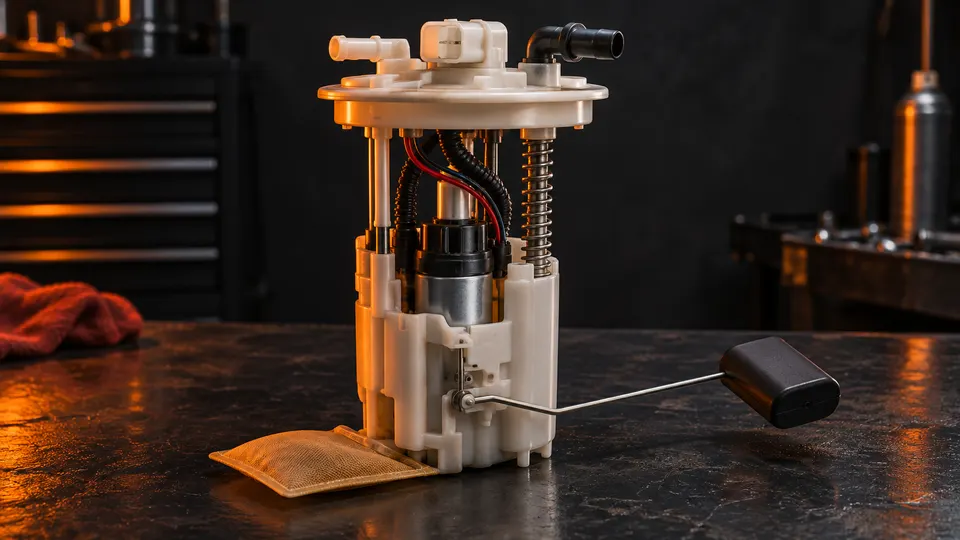
The bulletin's repair has four parts: reprogram the engine computer with updated software, replace the fuel pump assembly (the fuel suction tube with pump and gauge), reset the fuel alcohol learned value, and add fuel. It replaced an earlier bulletin, T-SB-0058-13. Toyota states that this repair is covered under the Toyota Federal Emission Warranty for 96 months or 80,000 miles, whichever comes first, from the in-service date, and only for the condition the bulletin describes.
Does the Toyota bulletin apply to my truck?
Only if your truck matches all three: it is a Tundra (2009 to 2019) or Sequoia (2009 to 2018), it has the 5.7L V8, and that V8 is the 3UR-FBE flex-fuel version. Not every 5.7L truck is flex-fuel. The bulletin also lists specific vehicle descriptor codes (part of the VIN) for each model.
The easiest way to be sure is to ask a Toyota dealer to check your VIN against open bulletins. You can also decode the VIN with our VIN decoder to confirm the model year and engine, and your owner's manual will say whether the truck is approved for E85.
If your Toyota is not on that list, the bulletin does not apply, and P0171 should be diagnosed like any other lean code. That includes most Toyota cars and crossovers.
Is it safe to drive a Toyota with P0171?
Usually yes for a short time, but get it checked soon. Carista lists rough idle, possible stalling, hesitation, reduced power and idle misfires as typical P0171 symptoms [3]. On the flex-fuel trucks in the bulletin, the main complaint is a long crank before the engine starts.
Pull over when it is safe and stop driving if the check engine light starts flashing or the engine shakes. The California Air Resources Board explains that a blinking light means a malfunction that could be damaging the catalytic converter [4]. Our guide to a flashing check engine light covers what to do next.
What should you check on a Toyota with P0171?
Start with a scanner, then the cheap checks. Our guide on how to use an OBD2 scanner explains freeze frame and live data.
- Read every code and the freeze frame. On a V8, note whether P0174 is set too. Both banks lean points to a shared cause. On a flex-fuel truck, also note any P1604 or rich codes, which match the bulletin's pattern.
- Check fuel trims. Carista notes that short and long term trims above +10% help confirm a lean condition. Compare idle with about 2,500 rpm: trims that drop at higher rpm suggest a vacuum leak.
- Visual check. Look at the intake boot between the air box and throttle body, vacuum and PCV hoses, the oil filler cap and the dipstick seal.
- Air filter and MAF sensor. Look for a dirty filter or debris on the sensor.
- Ask about bulletins. For a flex-fuel Tundra or Sequoia, ask the dealer about T-SB-0166-19 before paying for a fuel pump elsewhere. The bulletin's procedure needs Toyota's dealer scan tool to reset the fuel alcohol learned value.
- Fuel pressure and smoke tests by a qualified technician, since fuel pressure work involves a pressurized system.
- Oxygen sensor last. ALLDATA DIY warns that the sensor is often just reporting a real lean condition.
| Generic P0171 causes | Toyota flex-fuel bulletin (T-SB-0166-19) | |
|---|---|---|
| Which vehicles | Any make or model | 2009 to 2019 Tundra, 2009 to 2018 Sequoia, 3UR-FBE only |
| Typical complaint | Rough idle, hesitation, weak power | Long crank before starting, check engine light |
| Codes | P0171, often with P0174 | P0171, P0174, P0172, P0175 and/or P1604 |
| Main cause | Air leak, MAF sensor, low fuel pressure | Fuel alcohol estimate off, per the bulletin |
| Fix | Repair the leak or failed part | ECM update, fuel pump assembly, alcohol learn reset |
| Who pays | Owner, unless under warranty | Toyota Federal Emission Warranty, 96 months or 80,000 miles |
How do you fix P0171 on a Toyota, and what does it cost?
For trucks covered by T-SB-0166-19, the fix is the dealer procedure above, and Toyota's warranty statement covers it within 96 months or 80,000 miles for that condition. Outside that window, the cost depends on the dealer's labor and parts; the bulletin's warranty labor time is 2.2 hours. We do not quote a dollar figure, because we found no reliable public price for this job as of November 2026.
For every other Toyota, the fix is whatever the diagnosis finds, from a cheap hose or intake boot to a MAF sensor or fuel pump. Cost depends on the part, how much has to come apart and the shop's diagnostic time.
After a repair, clear the code and drive normally. Clearing a code does not fix anything, and it resets the readiness monitors. California requires all readiness monitors to be set to pass Smog Check, and they complete through normal driving or a drive cycle [5].
Frequently Asked Questions
Is there a Toyota recall for P0171?
The document we found is a technical service bulletin, not a recall. A bulletin tells dealers how to fix a known condition when a customer reports it; it does not mean every truck will be called in. For the flex-fuel 5.7L Tundra and Sequoia, Toyota's bulletin says the repair is covered under its Federal Emission Warranty within 96 months or 80,000 miles [1].
Does E85 cause P0171 on a Tundra?
Using E85 in a flex-fuel truck is normal. The bulletin describes a case where the truck's estimate of the fuel's alcohol content is higher than the real content, which throws off fuel trims. The fix is the dealer procedure, not avoiding the fuel the truck was built for.
Can I do the bulletin fix myself?
Not completely. The bulletin lists Toyota's Techstream dealer scan tool as required equipment, and the procedure includes reprogramming the engine computer and resetting the fuel alcohol learned value with it. The fuel pump job also means working on the fuel system. Because the repair may be covered under warranty when it matches the bulletin, a dealer visit is usually the cheaper route as well as the safer one.
My Toyota is a Camry or Corolla. Does the bulletin apply?
No. T-SB-0166-19 covers only flex-fuel 5.7L Tundra and Sequoia trucks. On a Camry, Corolla, RAV4 or other Toyota, follow the standard lean-code checks in our P0171 guide, starting with intake leaks and the MAF sensor.
Our Take
We think the most useful thing a Toyota owner can learn from this bulletin is to check for one before buying parts. If you drive a flex-fuel 5.7L Tundra or Sequoia with P0171 and a long crank, Toyota has already described the fix, and its warranty statement may cover it, so a dealer VIN check is the first call we would make. Paying an independent shop for a fuel pump alone would likely miss the software update and the alcohol learn reset in Toyota's procedure. For every other Toyota, there is nothing make-specific we could verify, so we would follow the standard order: scanner data, intake and PCV checks, MAF sensor, then fuel pressure.
Sources
- T-SB-0166-19: Extended Crank and/or MIL ON With DTC P0171, P0174, P0172, P0175, P1604 (Flex-Fuel). Toyota via NHTSA, 2019.
- What Common OBD-II Codes Really Mean. ALLDATA DIY, 2026.
- P0171 Code: Fuel Trim System Too Lean (Bank 1). Carista, 2026.
- On-Board Diagnostic II (OBD II) Systems Fact Sheet. California Air Resources Board, 2019.
- New OBD readiness monitor regulations explained. California Bureau of Automotive Repair, 2025.
This is general information to help you understand your vehicle, not a substitute for a hands-on diagnosis. If a warning light is flashing or the car runs badly, stop driving and have it checked by a qualified technician. Spotted an error? Tell us.
Keep Reading
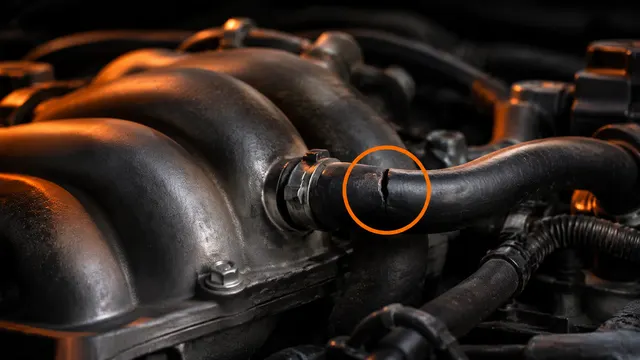
P0171 Code: System Too Lean (Bank 1)
P0171 means bank 1 is running lean: too much air or too little fuel. Learn if it is safe to drive, the usual causes, and the cheapest checks to try first.
P0174 Code: System Too Lean (Bank 2)
P0174 means bank 2 of a V6 or V8 is running lean. See if it is safe to drive, why it often appears with P0171, and which cheap checks to do before parts.
P0172 Code: System Too Rich (Bank 1)
P0172 means bank 1 is running rich: too much fuel or too little air. Learn if it is safe to drive, the usual causes, and the cheap checks to do before parts.
P0171 on Chevy: Causes, GM Bulletins and Fixes
P0171 on a Chevy: what it means, the GM bulletin on torn PCV diaphragms in 1.4L turbo Cruze, Sonic and Trax engines, if it is safe to drive, and what to check.
How Do You Use an OBD2 Scanner? A Step-by-Step Guide
Learn how to use an OBD2 scanner: find the port, read trouble codes, freeze frame and live data, and know when clearing a code is a bad idea before a smog test.
Why Is My Check Engine Light Flashing?
A flashing check engine light usually means a severe misfire that can overheat the catalytic converter. Here is what it means, what to do now and what to check.