P0174 Code: System Too Lean (Bank 2)
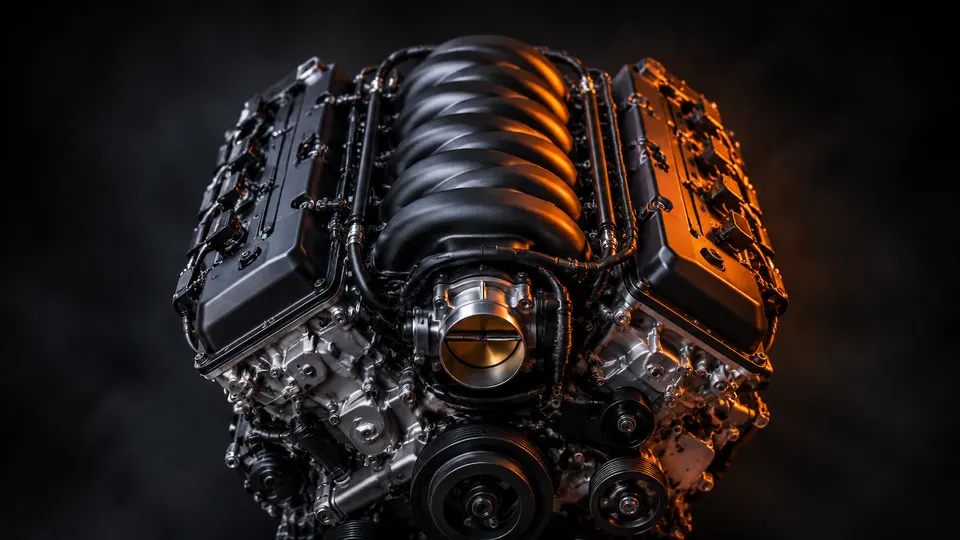
Quick Answer
P0174 means the engine computer is adding as much fuel as it is allowed on bank 2, the side of a V6 or V8 without cylinder 1, and the mixture still reads lean. You can usually keep driving for now, but get it checked soon. The most common cause is a vacuum or intake leak, and when P0171 is set too, look first at parts both banks share.
On this page
Key Takeaways
- P0174 is the bank 2 version of P0171 and only appears on engines with two cylinder banks, such as V6 and V8 engines.
- It is a "fix soon" code. Stop driving and get help if the check engine light flashes or the engine shakes.
- P0174 together with P0171 usually means a shared cause: a large intake leak, the MAF sensor, or low fuel pressure.
- P0174 alone points to something on bank 2 only, like a leaking intake gasket on that side or a bank 2 injector.
- Compare bank 1 and bank 2 fuel trims with a scanner before you buy parts.
P0174 at a glance
- Meaning
- System Too Lean (Bank 2)
- System
- Fuel & Air
- Severity
- Fix Soon The car usually still drives, but a lean mixture can cause hesitation, misfires and overheated parts, so get it diagnosed soon and stop if the check engine light starts flashing.
- Common causes
- Vacuum or intake air leak (often affecting both banks)
- Dirty or faulty MAF sensor
- Low fuel pressure from a weak pump or clogged filter
- Restricted bank 2 fuel injectors
- Faulty bank 2 oxygen sensor
- Applies to
- Generic OBD-II code: same meaning on all 1996 and newer cars and light trucks sold in the U.S.
What does P0174 mean?
P0174 means bank 2 is running lean: there is more air, or less fuel, than the engine computer wants on that side of the engine. Carista describes it as the computer adding significant extra fuel on bank 2, with fuel trims at their limit [1].
A V-type engine has two rows of cylinders called banks. Bank 1 is the side that holds cylinder 1, and bank 2 is the other side. Each bank has its own upstream oxygen sensor, so the computer can trim fuel separately for each side. When the bank 2 sensor keeps reporting a lean exhaust even after the computer has added all the fuel it can, P0174 sets and the check engine light comes on. Inline four-cylinder engines have only one bank, so they set P0171 instead.
A lean code tells you the mixture is wrong, not which part is broken. The oxygen sensor is usually reporting a real problem rather than causing one.
Is it safe to drive with P0174?
Usually yes for a short time, but P0174 is a "fix soon" code. Many drivers notice nothing. Others feel hesitation, a hunting or rough idle, weak power under load, or worse fuel economy; Carista notes the symptoms are usually worst at idle and light load [1]. If your idle is rough, our rough idle guide covers other causes too.
Do not let it ride for months. A lean mixture burns hotter and can lead to misfires. The California Air Resources Board says most manufacturers advise service as soon as conveniently possible when the light comes on, and that continued driving can damage other parts [3].
If the check engine light flashes or the engine shakes, pull over when it is safe and stop driving. CARB explains that a blinking light means a malfunction that could be damaging the catalytic converter. Our page on a flashing check engine light explains what to do next, and misfire codes like P0300 often appear alongside lean codes.
What causes P0174?
The causes match P0171, just on the other bank. Most common first:
- Vacuum or intake air leak. A cracked intake boot, a torn PCV hose or a leaking intake manifold gasket. Carista calls vacuum leaks the most common cause and recommends a smoke test first. Any air that enters after the MAF sensor is air the computer never measured, so it cannot add the right amount of fuel for it. A leak at the bank 2 end of the intake manifold can make only that side lean.
- Dirty or faulty MAF sensor. It feeds both banks on most engines, so a sensor that under-reads airflow usually makes both sides lean. Some V engines have two MAF sensors, one per bank, and then a dirty bank 2 sensor can set P0174 alone.
- Low fuel pressure. A weak pump or clogged filter starves both banks. The lean condition is often worst under load, such as climbing a hill or merging onto a highway, when the engine needs the most fuel.
- Restricted bank 2 fuel injectors. Deposits can narrow an injector's spray so it delivers less fuel than commanded. One weak injector may also show up as a misfire on that cylinder.
- Faulty bank 2 oxygen sensor. Check it last, after air and fuel causes are ruled out. An exhaust leak just ahead of the sensor can also pull in outside air and make the exhaust look leaner than it is.
The real trick with P0174 is reading which other codes are set. ALLDATA DIY reminds readers that a code identifies a system rather than a failed part, and that the simplest, least expensive possibility should be checked first [2].
| Pattern | What it suggests | First check |
|---|---|---|
| P0174 only | Something on bank 2 only | Intake gasket and hoses on the bank 2 side, bank 2 trims |
| P0174 and P0171 | Shared air or fuel problem | Intake boot, PCV, MAF sensor, fuel pressure |
| P0174 and P0172 or P0175 history | Fuel quality or sensor issue | Ask about a manufacturer bulletin, check MAF data |
| P0174 with misfire codes | Lean misfire on bank 2 | Stop if the light flashes; diagnose promptly |
How do you diagnose P0174?
Start with information, then cheap checks, then tests that need a shop. Our guide on how to use an OBD2 scanner explains freeze frame and live data.
- Read all codes and freeze frame. Note rpm, load and coolant temperature when P0174 set. Idle points to a vacuum leak; high load points to fuel delivery.
- Compare long term fuel trims for both banks. Carista says a large difference between bank 1 and bank 2 points to a bank 2 problem [1]. Similar high trims on both banks point to a shared cause.
- Visual check, engine off. Inspect the intake boot, vacuum lines and PCV hoses, and make sure the oil cap and dipstick seal.
- Listen at idle for hissing near the bank 2 side of the intake. Keep clear of belts and the fan.
- Inspect the air filter and MAF sensor.
- Smoke test and fuel pressure test. A shop smoke test finds hidden intake gasket leaks. Fuel pressure work involves a pressurized system, so have a qualified technician do it.
- Bank 2 oxygen sensor last.
How do you fix P0174, and what does it cost?
Fix what the diagnosis finds. A loose clamp or a cracked vacuum hose is a small job. A dirty MAF sensor may only need cleaning with MAF-safe cleaner. An intake manifold gasket on a V engine, a fuel pump, or injectors take more labor and cost more.
We have not found a reliable U.S. cost survey for P0174 as of November 2026, so we do not give a dollar range. Cost depends on the failed part, how much has to come apart to reach it (bank 2 parts often sit near the firewall), shop diagnostic time, and whether the repair falls under an emissions warranty or a manufacturer bulletin. For example, Toyota bulletin T-SB-0166-19 lists P0174 among the codes on some flex-fuel 5.7L Tundra and Sequoia trucks and says that repair is covered under the federal emission warranty [5]. See our P0171 on Toyota page for details.
After the repair, clear the code and drive normally. Clearing a code does not fix anything, and it resets the readiness monitors that inspection stations check. California requires all monitors to be set to pass Smog Check, and they complete through normal driving or a drive cycle [4].
Frequently Asked Questions
Why do P0171 and P0174 show up together?
Because something both banks share is letting in extra air or delivering too little fuel. A cracked intake boot, a dirty MAF sensor, a PCV leak or low fuel pressure affects both sides at once. Fix the shared cause and both codes usually stop returning.
Can a four-cylinder car set P0174?
Normally no. Inline four-cylinder engines have a single bank, so a lean condition sets P0171. If you see P0174 on a four-cylinder car, double-check the code with a code lookup and your scanner.
Should I replace the bank 2 oxygen sensor?
Only after ruling out air leaks, the MAF sensor and fuel pressure. Carista advises replacing the bank 2 oxygen sensor last [1]. The sensor usually reports a real lean condition.
Can a loose gas cap cause P0174?
A loose gas cap normally sets an evaporative system code such as P0455, not a lean code. Checking it costs nothing, but do not expect it to clear P0174. A loose oil filler cap or a dipstick that is not fully seated is a more likely cheap cause, because both let unmeasured air into the crankcase and the PCV system.
Will P0174 go away after I fix the leak?
The code stays stored until the computer runs its checks again or you clear it. After a real repair, fuel trims should move back toward normal within a few drives. If trims stay high or the code returns, the first fix did not find the whole problem, so keep working through the checks above.
Our Take
We see P0174 as a pattern-reading code more than a parts code. Based on the repair guidance we reviewed, the single most useful step is comparing fuel trims on both banks: it tells you whether to chase something shared, like the intake boot, PCV system, MAF sensor or fuel pressure, or something on bank 2 alone, like an intake gasket. That one comparison can save you from buying the wrong part. We would not replace an oxygen sensor for P0174 unless live data clearly showed it misbehaving. And because some manufacturers have published bulletins that list P0174, it is worth asking a dealer to run your VIN before paying for a big repair.
Sources
- P0174 Code: System Too Lean (Bank 2). Carista, 2026.
- What Common OBD-II Codes Really Mean. ALLDATA DIY, 2026.
- On-Board Diagnostic II (OBD II) Systems Fact Sheet. California Air Resources Board, 2019.
- New OBD readiness monitor regulations explained. California Bureau of Automotive Repair, 2025.
- T-SB-0166-19: Extended Crank and/or MIL ON With DTC P0171, P0174, P0172, P0175, P1604 (Flex-Fuel). Toyota via NHTSA, 2019.
This is general information to help you understand your vehicle, not a substitute for a hands-on diagnosis. If a warning light is flashing or the car runs badly, stop driving and have it checked by a qualified technician. Spotted an error? Tell us.
Keep Reading
P0171 Code: System Too Lean (Bank 1)
P0171 means bank 1 is running lean: too much air or too little fuel. Learn if it is safe to drive, the usual causes, and the cheapest checks to try first.
P0172 Code: System Too Rich (Bank 1)
P0172 means bank 1 is running rich: too much fuel or too little air. Learn if it is safe to drive, the usual causes, and the cheap checks to do before parts.
P0171 on Toyota: Common Causes and Fixes
P0171 on a Toyota: what the code means, the Toyota bulletin for flex-fuel 5.7L Tundra and Sequoia trucks, whether it is safe to drive, and checks to do first.
P0300 Code: Random/Multiple Cylinder Misfire Detected
P0300 means the engine is misfiring in more than one cylinder. Learn what a flashing light means, when to stop driving, common causes and checks to do first.
Why Is My Engine Idling Rough?
A rough idle usually comes from a misfire, a vacuum leak, a dirty throttle body or worn engine mounts. See the clues, related codes and what to check first.
How Do You Use an OBD2 Scanner? A Step-by-Step Guide
Learn how to use an OBD2 scanner: find the port, read trouble codes, freeze frame and live data, and know when clearing a code is a bad idea before a smog test.