Why Is My Engine Idling Rough?
Quick Answer
A rough idle means the engine shakes, stumbles or hunts for speed while the car is stopped. The usual causes are a misfire from worn spark plugs or coils, a vacuum leak, a dirty throttle body, fuel delivery problems or worn engine mounts. If the check engine light is flashing or the engine shakes hard, pull over and stop. Otherwise, read any codes and start with the cheap checks.
On this page
Key Takeaways
- Most rough idles come from four places: spark, air, fuel and the engine mounts.
- A flashing check engine light with a rough idle means a severe misfire. Stop driving.
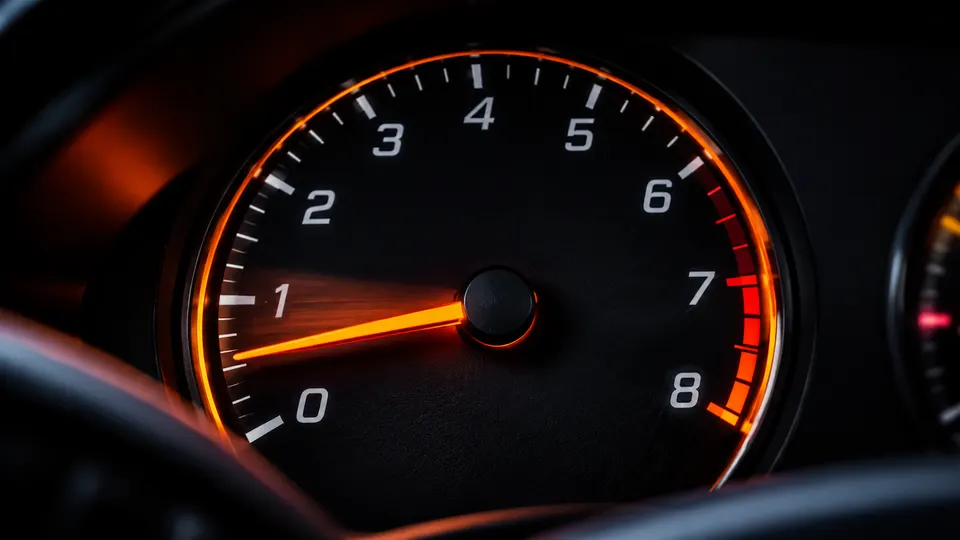
- Watch the tachometer: a needle that bounces at a stop points to the engine itself, a steady needle with shaking points to the mounts.
- Codes such as P0300, P0301 or P0171 narrow the search a lot, so scan before buying parts.
- Cleaning a throttle body or replacing plugs helps only when that is the actual cause.
What counts as a rough idle?
At idle the engine should run smoothly with a steady speed. A rough idle feels like shaking or shuddering through the seat and steering wheel, sometimes with a stumble or a sound that is not even. Haynes suggests watching the tachometer to see if engine speed fluctuates while you are stopped, and noting whether the vibration changes when you shift from Park to Drive or turn on the air conditioning [1].
Those two observations are free and useful. A tachometer needle that bounces at a stop usually means the engine itself is running unevenly, while a steady needle with a shaking car points toward the engine mounts. A rough idle that gets worse in Drive or with the A/C on means the engine is struggling as the load rises.
What causes a rough idle?
Haynes groups the causes into ignition (spark plugs and coils that weaken over time), air intake (vacuum leaks or a dirty throttle body), fuel delivery (clogged injectors or low fuel pressure) and worn engine mounts that pass normal engine movement into the cabin [1].
| Cause | Why it shakes at idle | Clue |
|---|---|---|
| Worn plugs, weak coils | A cylinder misfires and stops pulling | Bouncing tach, misfire codes |
| Vacuum leak | Extra air the computer cannot measure leans out the mixture | Hissing near the intake, lean codes |
| Dirty throttle body | Deposits upset the small airflow used at idle | Rough or unstable idle, better after cleaning |
| Clogged injectors, low fuel pressure | Cylinders get uneven fuel | Stumble that may also show under load |
| Carbon on valves | Valves seal poorly or stick | Rough idle, misfires, hard starts |
| Worn engine mounts | Normal engine motion reaches the cabin | Steady tach, clunk when shifting |
Why idle shows problems first
Idle is the hardest test for a weak engine. The engine turns slowly, the throttle is almost closed and only a small amount of air gets in. A leak that adds a little unmeasured air barely matters at highway speed, but at idle it is a large share of the total, so the mixture goes lean and cylinders stumble. In the same way, a single weak cylinder is easy to feel at a slow, steady idle, while at higher engine speed the other cylinders smooth it over. That is why many drivers notice a rough idle long before they notice any loss of power.
Vacuum leaks and the throttle body
Vacuum hoses get hard and crack with age and heat, and intake ducts can come loose after other work under the hood. Haynes suggests listening for a faint hiss with the engine idling, since that can point to an air leak [1].
A dirty throttle body deserves a closer look because it is cheap to check. Haynes notes that dirt buildup can gum up the throttle butterfly and cause a rough idle [2].
Carbon is a known issue too. A General Motors bulletin covering 2000 to 2025 GM gasoline engines lists rough idle, extended cranking and misfire codes caused by heavy carbon on the intake or exhaust valves, or sticking valves [3]. If your car is also slow to fire up, see why a car is hard to start.
Engine mounts
Engine mounts hold the engine in place and soak up its vibration. When they wear, normal engine movement reaches the cabin [1]. The engine may run perfectly, with no codes and a steady tachometer, yet the car still shakes at a stop, and the shake may change when you shift into Drive. Mount inspection usually means raising the car, so it is a job for a shop or a well equipped driveway with proper stands.
Is it safe to drive with a rough idle?
It depends on what comes with it. If the check engine light is flashing, or the engine shakes hard and loses power, pull over where it is safe and stop driving. A flashing light means a misfire severe enough to damage the catalytic converter: California's OBD II rule requires the light to blink while that level of misfire is happening [4]. Our flashing check engine light guide explains what to do next.
A rough idle with misfire codes and a steady light is still a reason to limit driving, because misfires can cause stalling and hesitation in traffic [5]. A mild shake with no light, no codes and a steady tachometer is less urgent, but a worn engine mount should still be checked soon. If the shaking happens when you brake rather than at idle, that is a different problem: see why a car shakes when braking.
Which check engine codes come with a rough idle?
A rough idle by itself does not set a code. The codes come from what is causing it, and they are the fastest way to narrow the search:
- P0300: random or multiple cylinder misfire. Often a shared cause such as a vacuum leak or fuel supply problem.
- P0301 to P0312: a misfire in one named cylinder. Start with that cylinder's plug and coil.
- P0171 and P0174: the engine is running lean. A vacuum leak is a classic cause of a lean rough idle.
If none of these appear, the cause may be mechanical, such as engine mounts, or a misfire too mild to set a code yet. Pending codes are worth checking too, and our OBD2 scanner guide shows where to find them.
How do you diagnose a rough idle?
Start with what you can see, hear and read, and only then buy parts.
- Scan for codes. Check for stored and pending codes and save the freeze frame data.
- Watch the tachometer. A bouncing needle means the engine runs unevenly; a steady needle with shaking suggests mounts [1].
- Change the load. Note whether the shake changes in Park versus Drive, or with the A/C on.
- Listen for a hiss. With the engine idling, a faint hiss near the intake can point to an air leak.
- Look at the obvious parts. With the engine off and cool, check vacuum hoses, coil connectors and the air intake duct between the filter box and throttle body.
- Check plugs and throttle body. Inspect spark plugs for wear or fouling [5]. Look for dark deposits in the throttle body.
- Pass on the hard tests. Fuel pressure, smoke tests and compression tests need tools; have a qualified technician do them.
How do you fix a rough idle, and what does it cost?
Fix the cause the checks point to: new spark plugs or a coil, a replaced vacuum hose, a cleaned throttle body, injector or fuel pump work, a carbon cleaning service, or new engine mounts. Haynes describes cleaning a throttle body with a throttle or fuel injection cleaner and a small brush, and warns that some throttle position sensors need recalibration if removed [2]. On engines with an electronic throttle, follow the service manual for your car.
We found no reliable, current cost range for November 2026, so here is what drives the price:
- Which part failed. A vacuum hose or a throttle body cleaning is a small job; a fuel pump, injectors or engine mounts cost much more.
- How hard the part is to reach. Some plugs, coils and mounts are buried, which adds labor.
- How long the problem was ignored. Driving on a misfire can damage the catalytic converter, which can later set P0420.
After a repair, clearing the code only turns the light off. It does not fix the cause, and inspection stations check that the readiness monitors have completed.
Frequently Asked Questions
Can low oil or old oil cause a rough idle?
Oil problems can contribute in some engines. GM's carbon bulletin, for example, pairs its cleaning procedure with an oil and filter change and advises regular oil changes and Top Tier gasoline [3]. Check the oil level anyway: it is free.
Why is my idle rough only when the engine is cold?
Some misfires and leaks show up only before the engine warms up, and GM's carbon bulletin notes that when the engine is cold, compression on several cylinders can drop to zero from sticking valves [3]. Save the freeze frame data from any code, because it records the engine temperature when the fault happened.
Why does my car shake at idle but drive smoothly?
Engine mounts are a common reason. At idle the engine moves at a low, uneven rhythm that worn mounts pass into the cabin [1]. A steady tachometer with a shaking car supports that idea.
Our Take
A rough idle is a symptom with a short list of usual suspects, and we think the order of checks matters more than any single part. The tachometer and the scanner come first because they are free and split the problem in two: engine running unevenly, or engine running fine but shaking the car. From there, codes point you to spark, air or fuel. We would not start by cleaning or replacing parts on a hunch. The one exception to patience is a flashing check engine light: that is a misfire hurting the catalytic converter, and the right move is to stop.
Sources
- Car Shaking At Idle: What's Really Behind The Vibration. Haynes, 2026.
- What Is a Throttle Body and What Does It Do?. Haynes, 2025.
- Service Bulletin 16-NA-383: Rough Idle, Crank No Start, Extended Crank or Misfire Due to Excessive Carbon on Top of Valves or Sticking Valves. General Motors via NHTSA, 2024.
- Title 13, California Code Regulations, Section 1968.2, Malfunction and Diagnostic System Requirements (OBD II), Final Regulation Order. California Air Resources Board, 2002.
- P0300 Engine Code: Random, Multiple Misfire Detected. FIXD, 2024.
This is general information to help you understand your vehicle, not a substitute for a hands-on diagnosis. If a warning light is flashing or the car runs badly, stop driving and have it checked by a qualified technician. Spotted an error? Tell us.
Keep Reading

Why Is My Car Hard to Start?
A hard-starting car usually has a weak battery, a fuel delivery problem, worn spark parts, or a sensor fault. Learn how to narrow it down, cheap checks first.
Why Does My Car Shake When I Brake?
A car that shakes when braking usually has uneven brake rotors, a sticking caliper, or tire and suspension problems. Learn the causes and when to stop driving.