Why Is My Check Engine Light Flashing?
Quick Answer
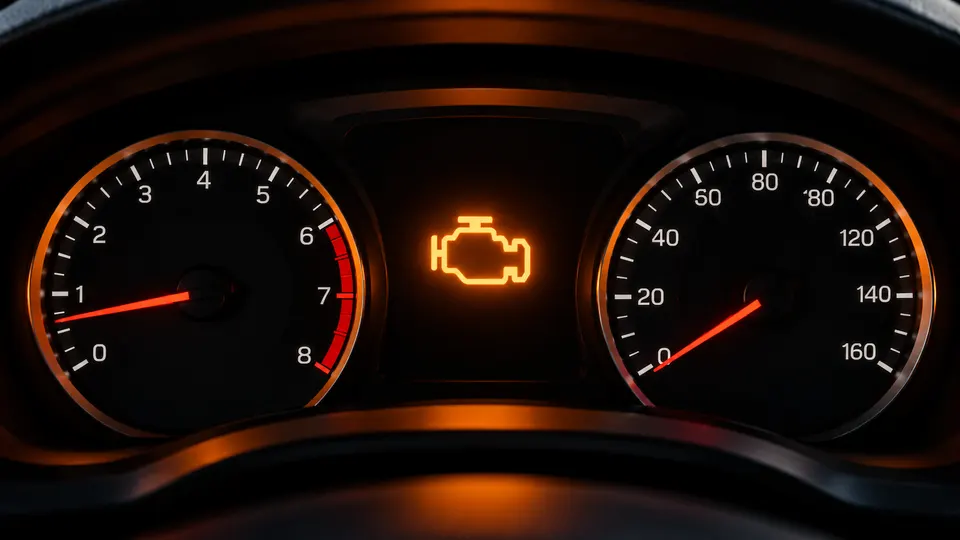
A flashing check engine light means the engine is misfiring badly enough to damage the catalytic converter. Unburned fuel is reaching the exhaust and burning there, which can overheat the converter and, in the worst case, start a fire. Slow down, pull over where it is safe, turn the engine off and have the car towed or checked. Then read the codes, which usually start with P030.
On this page
- What does a flashing check engine light mean?
- Is it safe to drive with a flashing check engine light?
- What is the difference between a flashing and a steady check engine light?
- What causes a flashing check engine light?
- What should you do after you stop?
- What happens if you keep driving?
- What happens after the repair?
- Frequently Asked Questions
- Our Take
- Sources
Key Takeaways
- A flashing check engine light is the urgent version of the light. It means a misfire is happening right now.
- Pull over safely, turn the engine off and arrange a tow. Do not drive on to the shop.
- A steady light is a stored fault; a flashing light is an active, severe misfire.
- The usual causes are spark plugs, ignition coils, fuel delivery problems, vacuum leaks and low compression.
- Clearing the code or seeing the light stop flashing does not mean the problem is gone.
What does a flashing check engine light mean?
A flashing light is a specific message, not a louder version of a steady one. California's OBD II regulation, which sets detailed rules for the on-board diagnostic system, requires the light to blink once per second while the engine is misfiring at a level that can damage the catalytic converter [1]. Owner manuals say the same in plain words. Ford's 2007 F-550 owner guide explains that a blinking light means engine misfire is occurring which could damage the catalytic converter [2].
A flashing check engine light means a severe misfire is happening now, and every mile you drive sends more unburned fuel into the catalytic converter. A misfire happens when a cylinder fails to burn its fuel. That fuel does not disappear: it leaves through the exhaust and burns in the hot converter instead, raising its temperature [3].
How does the car decide a misfire is that serious? The engine computer counts misfires in short windows of 200 engine revolutions. Each automaker works out, for every engine speed and load, what share of misfires would heat the catalytic converter to a damaging temperature, and the light starts flashing when that share is exceeded [1]. That is why the light can flash at highway speed or on a hill but settle down at idle: the threshold depends on how hard the engine is working.
The system also saves a snapshot called freeze frame data when it logs the misfire, with conditions such as engine speed, load and temperature. A scanner can read it later, which is why it pays to read the codes before anyone clears them.
Is it safe to drive with a flashing check engine light?
No. If your check engine light is flashing, slow down, pull over where it is safe and turn the engine off. FIXD advises stopping once safely parked and arranging roadside help rather than driving to a shop, because continuing the trip risks catalytic converter damage [3]. Ford's owner guide warns that under misfire, excessive exhaust temperatures could damage the catalytic converter, the fuel system, interior floor coverings or other parts, possibly causing a fire [2].
The same advice applies if the light is steady but the engine shakes hard, stumbles or loses power. Some engines cut fuel to a badly misfiring cylinder and keep the light steady instead of flashing it, which the regulation allows [1]. Trust what the engine feels like, not only the light.
If you cannot stop right away, such as in a tunnel or on a bridge, drive gently: low speed, no hard acceleration, no towing, and leave the road at the first safe place.
What is the difference between a flashing and a steady check engine light?
A steady light means the system has confirmed a fault and stored a code. That fault can be anything from a loose gas cap to a failing sensor. A flashing light is reserved for a misfire severe enough to harm the catalytic converter [1]. Haynes puts it simply: a flashing check engine light is the urgent version [5].
The light can also switch between the two. Under the regulation, it blinks while the severe misfire is happening and stays on steadily once the misfire stops [1]. So a light that flashed going uphill and turned steady on flat road is still telling you about the same misfire.
What causes a flashing check engine light?
Almost always a misfire, and misfires have four families of causes: spark, fuel, air and compression. FIXD lists ignition faults (spark plugs, coils, wiring), fuel system problems (clogged or leaking injectors, pressure faults, contaminated fuel), air leaks and sensor faults, and low compression from valve, piston or timing problems [3].
| Family | Common causes | Usual codes |
|---|---|---|
| Spark | Worn plugs, failing coils, damaged wires or connectors | P0300, or a cylinder code such as P0301 |
| Fuel | Clogged or leaking injector, low fuel pressure, bad fuel | P0300, sometimes lean codes |
| Air | Vacuum leak, intake leak, airflow sensor fault | P0300 with P0171 or P0174 |
| Compression | Burnt valve, worn rings, timing or head gasket problem | One or more cylinder codes |
| Software | Engine calibration that misreads misfire | P0300 or a cylinder code |
Software is the surprise on that list. A General Motors bulletin for some 2013 to 2014 vehicles with the 3.6L V6, including the Chevrolet Camaro, describes a light that flashes when accelerating, with P0300 or P0303 stored, and says to reprogram the engine control module with updated software if no other cause is found [6]. Our P0300 on Chevrolet article covers GM bulletins in more depth.
What should you do after you stop?
Once the car is parked safely, the job is to find out which cylinder is misfiring and why. Do it in this order:
- Note the conditions. When did it start flashing: cold start, idle, uphill, at highway speed? Did other warning lights come on? FIXD suggests writing this down [3].
- Read the codes. Plug in a scanner that shows freeze frame data. Our OBD2 scanner guide walks through it, and the code lookup tool explains any code you find.
- Follow the code. P0300 means random or multiple misfires. P0301 and its siblings name one cylinder. Lean codes such as P0171 point to an air leak or fuel supply problem.
- Do only the safe checks yourself. With the engine off and cool, look for a disconnected coil plug, a cracked vacuum hose or a damaged plug wire. Leave fuel pressure and compression tests to a qualified technician.
- Tow it if the cause is not obvious. A misfire that you cannot explain is not one to drive on.
What happens if you keep driving?
The catalytic converter takes the first hit. A converter that has overheated may stop cleaning the exhaust well, which can later set P0420, and replacing a converter costs far more than most misfire repairs. Ford's owner guide also lists the fuel system, floor coverings and other parts as at risk, with possible fire [2]. Misfires can also cause stalling and hesitation, which is dangerous in traffic [4].
If a damaged converter has to be replaced, use a legal replacement part. Removing or disabling emissions equipment is illegal, and the Clean Air Act prohibits tampering with emissions controls [7].
What happens after the repair?
After the cause is fixed, the code can be cleared and the car driven normally. Clearing a code does not fix anything, and a light that stopped flashing on its own has not fixed anything either: FIXD warns the flashing can return without notice [3]. The system can turn the light off by itself after three drive cycles in similar conditions without the misfire [1].
For inspection, a car with the check engine light on will not pass a California Smog Check, and the readiness monitors need a week or two of normal driving to reset after a battery disconnect [8]. If the engine also idles poorly after the repair, see rough idle causes.
Frequently Asked Questions
Why does my check engine light flash and then stop?
The light blinks only while the severe misfire is happening and turns steady when it stops [1]. Many misfires appear only under load, such as accelerating or climbing a hill. The fault is still there, so read the codes and get it fixed.
Can I drive a few miles to a repair shop?
It is not recommended. FIXD advises arranging roadside help rather than driving to a shop [3]. If you truly have no choice, drive slowly and gently, with no hard acceleration, and stop if the shaking gets worse.
Does a flashing check engine light always mean a misfire?
While you are driving, yes in practice: the regulation reserves the blinking light for catalyst damaging misfire. One exception happens with the key on and the engine off. Some cars blink the light for a few seconds at that point to show that the readiness monitors are not complete [1]. That is a status signal, not a misfire.
Can a loose gas cap make the check engine light flash?
A loose gas cap is a classic cause of a steady light, but a flashing light is reserved for misfire that can damage the catalytic converter [1]. Do not assume a flashing light is something minor.
Our Take
We treat a flashing check engine light as the one dashboard warning with no gray area. The rules behind it are clear: the light only flashes for a misfire bad enough to hurt the catalytic converter, and the owner guide we cite mentions fire risk. Pulling over costs you time. Driving on can cost you a converter. Once the car is safe, the problem usually turns out to be ordinary: a plug, a coil, a hose or an injector. A scanner and a careful look often point to it quickly. We would rather see a reader tow a car with a cheap fix than drive a car into an expensive one.
Sources
- Title 13, California Code Regulations, Section 1968.2, Malfunction and Diagnostic System Requirements (OBD II), Final Regulation Order. California Air Resources Board, 2002.
- 2007 F-550 Owner's Guide. Ford Motor Company, 2007.
- Check engine light flashing meaning and what to do. FIXD, 2026.
- P0300 Engine Code: Random, Multiple Misfire Detected. FIXD, 2024.
- Fault Code P0300 Misfire: How to Fix it Yourself (2026). Haynes, 2026.
- Preliminary Information PI1122B: Malfunction Indicator Lamp Flashes Due to Engine Misfire On Acceleration, DTC P0300 and/or P0303 Set. General Motors via NHTSA, 2014.
- National Enforcement and Compliance Initiative: Stopping Aftermarket Defeat Devices for Vehicles and Engines. U.S. EPA.
- Smog Check: When you need one and what's required. California Bureau of Automotive Repair.
This is general information to help you understand your vehicle, not a substitute for a hands-on diagnosis. If a warning light is flashing or the car runs badly, stop driving and have it checked by a qualified technician. Spotted an error? Tell us.
Keep Reading
How Do You Use an OBD2 Scanner? A Step-by-Step Guide
Learn how to use an OBD2 scanner: find the port, read trouble codes, freeze frame and live data, and know when clearing a code is a bad idea before a smog test.