P0700 Code: Transmission Control System Malfunction
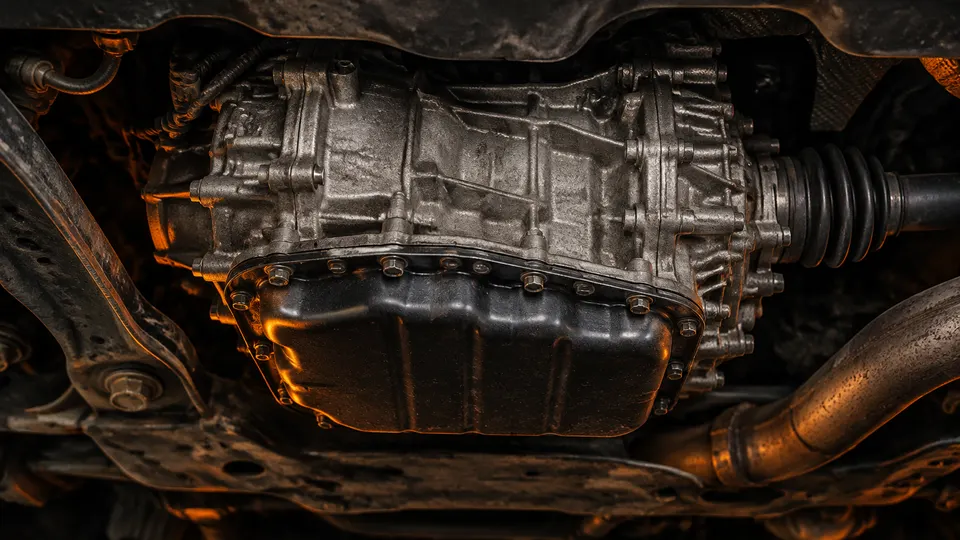
Quick Answer
P0700 means your transmission control module (TCM) found a problem and asked the engine computer to turn on the check engine light. It is a messenger code, not a diagnosis. You can usually drive carefully for a short time, but get it checked soon, and stop driving if the transmission slips or will not shift. The real cause is a second code stored inside the TCM.
On this page
Key Takeaways
- P0700 is a "MIL request" from the transmission computer. The specific fault lives in a separate transmission code.
- A basic code reader that only talks to the engine computer often shows P0700 alone. You need a scan tool that can read the TCM.
- Common causes are a stored P07xx fault, low or dirty fluid, wiring at the transmission, and communication faults.
- Treat it as Fix Soon. Stop driving if the car slips, flares, will not move, or the transmission overheats.
- Do not replace the transmission computer just because P0700 is set.
P0700 at a glance
- Meaning
- Transmission Control System (MIL Request)
- System
- Transmission
- Severity
- Fix Soon The transmission may shift harshly or lock into one gear (limp mode), so read the transmission module's codes and get it checked soon, and stop driving if it slips or will not shift.
- Common causes
- Another stored transmission fault (P07xx: solenoid, sensor, gear ratio)
- Low, old or contaminated transmission fluid
- Wiring or connector problem at the transmission
- Communication fault between the TCM and engine computer
- Failing transmission control module
- Applies to
- Generic OBD-II code: same meaning on all 1996 and newer cars and light trucks sold in the U.S.
What does P0700 mean?
Modern automatics have their own computer, the transmission control module. It watches speed sensors, the range sensor, and the solenoids that apply each gear. When it finds a fault it stores its own code. It then sends a message over the vehicle network asking the engine computer to light the check engine light. The engine computer records that request as P0700.
Carista's code library calls P0700 "a general MIL request from the TCM" and describes it as a wrapper around the real fault [1]. General Motors says the same thing in plainer terms in a technician newsletter: P0700 is an informational code, and the control module should not be replaced just because it is set [2].
P0700 tells you the transmission computer has a complaint. It does not tell you what the complaint is.
Is it safe to drive with P0700?
P0700 is a Fix Soon code. Many cars drive normally with it, at least at first. Others shift harshly, hold one gear, or drop into a protective "limp mode" that limits speed and gears. Carista lists harsh shifts, slipping, limp mode, delayed engagement into Drive or Reverse, and refusing to leave a gear as typical signs [1].
Use these rules:
- Drives normally: you can usually keep driving gently while you book a scan. Avoid towing and hard acceleration.
- Harsh or late shifts, stuck in one gear: drive only as far as you must, at moderate speed.
- Slipping, flaring revs, no movement in Drive or Reverse, a burning smell, or a transmission temperature warning: stop driving and have the car towed. Driving on a slipping transmission can turn a sensor or solenoid repair into an overhaul.
The U.S. Department of Energy's fuel economy site gives the same general advice for any check engine light: something is wrong, so have the vehicle looked at soon [4]. A flashing light is a different, more urgent situation, usually a misfire. Our flashing check engine light guide explains it.
What causes P0700?
Because P0700 only relays a message, its "cause" is whatever set the transmission code underneath it. The usual groups, most common first, are:
- Another stored transmission fault (P07xx). Shift solenoid, pressure control solenoid, speed sensor, range sensor, or gear ratio errors.
- Low, old, or contaminated fluid. Fluid that is low or burnt affects how solenoids work and how clutches apply [1].
- Wiring or connector problems at the transmission case or the module, such as corrosion, a loose plug, or a chafed harness.
- Communication faults between the TCM and the engine computer, which usually come with U codes such as U0101.
- A failing transmission control module or one that needs a software update. This is the least likely and should be confirmed by a technician, not assumed.
Haynes' public code list makes the same point: P0700 shows the transmission module has detected a fault, and you often need the additional transmission-specific codes to find the underlying issue [5].
| What you see | What it usually points to | Who should handle it |
|---|---|---|
| P0700 plus a P07xx code | The specific sensor, solenoid or ratio fault named by that code | DIY checks, then a shop |
| P0700 plus U0101 or U0100 | Module communication or power and ground problem | Shop with network diagnostics |
| P0700 alone, transmission feels fine | Code reader cannot see the TCM, or an intermittent fault | Rescan with a TCM-capable tool |
| P0700 with slipping or no movement | Mechanical or hydraulic problem inside the transmission | Qualified technician, tow it |
How do you diagnose P0700?
Start with the cheap, safe steps. Our guide to using an OBD2 scanner covers the scanning part in detail.
- Note the symptoms. When does it happen: cold start, highway speed, a certain gear? This helps whoever reads the codes.
- Check the fluid if your car allows it. Many vehicles have a dipstick; some sealed units do not and need a shop. Use the method in your owner's manual. Look for low level, a burnt smell, or dark, gritty fluid.
- Scan the transmission module, not just the engine. Some basic readers only see the engine computer, so they show P0700 alone. A scan tool that can select the TCM will show the specific code and its freeze frame data.
- Look up that specific code with our code lookup tool, and check whether it is a sensor, solenoid, ratio, or communication fault.
- Check for bulletins and recalls. Decode your VIN with the VIN decoder to confirm the exact model, year, and transmission, then ask a dealer about service bulletins. Some makes have bulletins that mention P0700 directly. For example, GM bulletin 23-NA-210 covers P0700 with P18AE on certain 2023 to 2025 trucks and Cadillacs [3].
- Inspect wiring you can reach safely with the engine off and cool: connectors at the transmission and module, and any harness that rubs on metal.
If you only have P0700 and nothing else, the next step is a better scan, not a new part.
Anything inside the transmission, valve body work, or module programming belongs to a qualified technician.
How do you fix P0700, and what does it cost?
You fix P0700 by fixing the code underneath it. Once the root fault is repaired, P0700 normally stops coming back [1]. Typical repairs include topping up or servicing the fluid with the correct type, repairing a connector or harness, replacing a speed or range sensor, replacing a solenoid or valve body, reprogramming the module, or internal transmission repair.
We are not giving a dollar range here, because no reliable U.S. source we checked as of November 2026 publishes one for P0700 itself, and the spread is huge. What drives the cost:
- Which code is underneath. An external sensor or connector is a small job. A valve body or internal clutch failure is a large one.
- Access. Some sensors and solenoids are outside the case; others need the pan or the transmission removed.
- Fluid type and capacity. Many modern automatics need a specific fluid and a fill procedure with a scan tool.
- Software. Some fixes are a module update done at a dealer.
- Warranty. Newer vehicles may be covered. Check before paying for diagnosis.
Clearing the code does not fix anything. If you clear it after a repair, the monitors need a full drive cycle to run again, and emissions inspection stations check that readiness status.
Which vehicles get P0700 most often?
Any OBD-II vehicle with an electronically controlled automatic can set P0700, so it shows up across most makes. Some manufacturers publish bulletins that name it. GM's 23-NA-210 bulletin, for instance, covers the check engine light coming on right after start-up with P18AE and/or P0700 stored in the TCM on certain 2023 to 2025 Chevrolet Silverado 1500, GMC Sierra 1500, and Cadillac models [3]. If you drive a Chevy, see our page on P0700 on Chevrolet. You can browse other codes on the trouble codes index.
Frequently Asked Questions
Can a basic code reader show what is behind P0700?
Often not. Some low-cost readers only talk to the engine computer, so they show P0700 alone. You need a scan tool that can select the transmission module and read its codes, or a shop that has one.
Will P0700 go away on its own?
It can turn off if the underlying fault was intermittent and does not return over several drive cycles. The stored history usually remains, and the problem can come back. Find the specific transmission code instead of waiting.
Should I replace the transmission control module for P0700?
No, not on P0700 alone. GM tells its technicians not to replace the control module just because P0700 is set [2]. The module is replaced only when the specific code and testing point to it.
Can low transmission fluid cause P0700?
Yes. Low or contaminated fluid can affect solenoid operation and clutch application, which can set a transmission code and P0700 with it. Check fluid level and condition first if your car has a dipstick.
Does P0700 mean the same thing on every car?
Yes, the meaning is the same: the transmission module has stored a fault and asked for the check engine light. What differs is the code underneath. Some are standard P07xx codes, and some are manufacturer-specific codes. GM's bulletin 23-NA-210, for example, pairs P0700 with P18AE, a GM-specific code, on certain 2023 to 2025 models [3]. That is why a scan tool that reads the transmission module, plus service information for your exact vehicle, matters more than the P0700 code itself.
Our Take
We think P0700 is one of the most misunderstood codes, because it looks like a diagnosis and is really a pointer. The sources agree: the useful information sits in the transmission module, and nothing should be replaced until someone reads it. Our advice is to spend money on a proper scan before parts, check the fluid if you can, and look up bulletins for your exact vehicle. If the transmission slips or will not engage, we would stop and tow rather than risk turning a sensor fault into an overhaul. If it drives normally, you have a little time, but not unlimited time.
Sources
- P0700 Code. Carista, 2026.
- TCM DTCs Set on Vehicle Start Up. GM TechLink, 2022.
- Malfunction Indicator Lamp (MIL) Illuminated, DTCs P18AE and/or P0700 Set, Bulletin 23-NA-210. General Motors (hosted by NHTSA), 2024.
- Gas Mileage Tips: Keeping Your Vehicle in Shape. U.S. Department of Energy, FuelEconomy.gov, 2026.
- OBD2 Codes List: Your Go-To Reference. Haynes, 2026.
This is general information to help you understand your vehicle, not a substitute for a hands-on diagnosis. If a warning light is flashing or the car runs badly, stop driving and have it checked by a qualified technician. Spotted an error? Tell us.
Keep Reading
P0420 on Nissan: Campaigns, Sensor Names and What to Check
P0420 on a Nissan: the Sentra SULEV emission campaign, how Nissan names its A/F and rear O2 sensors, what to check first, and when a dealer visit is free.
P0430 Code: Catalyst Efficiency Below Threshold (Bank 2)
P0430 means the Bank 2 catalytic converter on a V6 or V8 tests below its limit. See if it is safe to drive, what causes it, how to check it and what fixes cost.
P0430 on Ford: Recall 24E04, Bulletins and What to Check
P0430 on a Ford truck may be a software calibration issue. See Emission Recall 24E04 for F-150 hybrids, the 7.3L bulletins, safety and what to check first.
P0442 Code: Small EVAP Leak Detected
P0442 means your EVAP system found a small fuel vapor leak, about 0.040 inch. Learn if it is safe to drive, the common causes, and the checks to do first.
P0455 Code: Large EVAP Leak Detected
P0455 means a large leak in the fuel vapor (EVAP) system, often a missing or loose gas cap. See what it means, how soon to fix it, causes, and first checks.
P0456 Code: Very Small EVAP Leak
P0456 means your EVAP system found a very small vapor leak. Learn what it means, if it is safe to drive, the usual causes, and the cheap checks to do first.