P0300 Code on Chevrolet: Misfire Causes and GM Bulletins
Quick Answer
On a Chevrolet, P0300 means the same as on any car: misfires spread across cylinders. What is specific is that GM has published bulletins about it. One covers 2000 to 2025 GM gasoline engines with misfires from carbon on the valves or sticking valves. Others cover oil fouled plugs and a software update. It is not safe to keep driving: if the light flashes, pull over and stop.
On this page
- What makes P0300 different on Chevrolet?
- Which Chevrolet models have a GM bulletin for P0300?
- Is it safe to drive a Chevrolet with P0300?
- How do you check P0300 on a Chevrolet?
- How do generic causes compare with Chevrolet bulletin causes?
- Does a GM bulletin mean a free repair?
- Frequently Asked Questions
- Our Take
- Sources
Key Takeaways
- GM bulletin 16-NA-383 links P0300 to P0308, rough idle and long cranking on 2000 to 2025 GM gasoline engines to carbon on the valves or sticking valves.
- Other GM bulletins cover oil fouled spark plugs (2008 to 2009 Silverado and Tahoe Hybrid, 2024 Trax and Trailblazer) and an engine software update (some 2013 to 2014 Camaro 3.6L).
- A flashing check engine light means a misfire that can damage the catalytic converter. Pull over and stop driving.
- Ask a Chevrolet dealer which bulletins and software updates apply to your VIN before replacing parts.
- Plugs, coils and vacuum leaks still cause many Chevy misfires, so do the basic checks too.
P0300 at a glance
- Meaning
- Random/Multiple Cylinder Misfire Detected
- System
- Ignition & Misfire
- Severity
- Stop Driving Misfires can quickly overheat and ruin the catalytic converter and make the car hesitate or stall, so avoid driving it and do not drive at all if the check engine light is flashing.
- Common causes
- Worn or fouled spark plugs
- Failing ignition coils or plug wires
- Vacuum or intake leak
- Clogged or leaking fuel injectors
- Low fuel pressure
- Chevrolet specifics
- GM bulletin 16-NA-383 tells technicians that rough idle, long cranking and P0300 to P0308 misfires on 2000 to 2025 GM gasoline engines can come from carbon buildup on the valves or sticking valves. Applies to: 2000-2025 Chevrolet and other GM gasoline engines. Bulletin 16-NA-383.
- Applies to
- Generic OBD-II code: same meaning on all 1996 and newer cars and light trucks sold in the U.S.
What makes P0300 different on Chevrolet?
The code itself is generic. California's OBD II regulation requires the diagnostic system to store a multiple cylinder misfire code when misfires are spread across cylinders [5], and our main P0300 article covers the causes every engine shares. What is different on a Chevrolet is the paper trail. GM has sent dealers technical bulletins that describe specific P0300 patterns, and NHTSA publishes copies on its document server, static.nhtsa.gov.
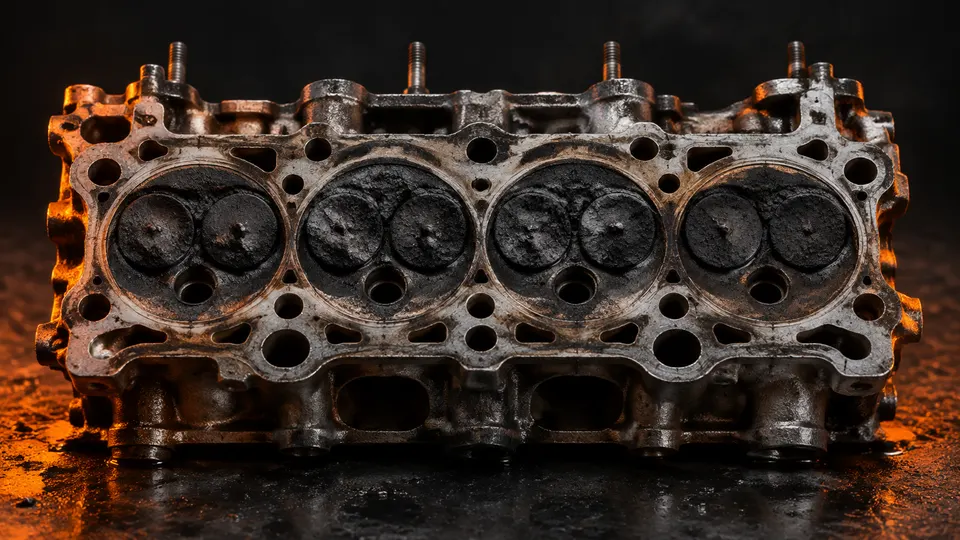
The widest one is bulletin 16-NA-383, dated June 2024. It covers Buick, Cadillac, Chevrolet and GMC passenger cars and trucks with gasoline engines from 2000 to 2025. It says owners may notice a rough idle, a crank no start, extended cranking or an engine misfire, with P0300 to P0308 stored. The cause it describes is major carbon buildup on the intake or exhaust valves, or sticking valves, and it says these misfires should not appear before about 5,000 miles [1].
The GM bulletin warns that standard diagnosis may not find the cause, because the valves may not be sticking at the moment the engine is tested. That explains a frustrating pattern: a misfire that comes and goes, especially on cold starts, with no failed part found. The bulletin notes that compression on several cylinders can read zero when the engine is cold, and that the plugs may be fuel fouled [1].
GM's fix is a dealer procedure: an upper engine and valve cleaning with GM approved products, an oil and filter change, and advice to use Top Tier gasoline. The bulletin says GM does not recommend aftermarket top engine cleaning products, and that engines with valve damage need mechanical repair first [1].
Which Chevrolet models have a GM bulletin for P0300?
Beyond the wide carbon bulletin, three narrower GM documents name Chevrolet models and P0300:
| Bulletin | Chevrolet models | What it describes |
|---|---|---|
| 16-NA-383 (2024) | 2000 to 2025 gasoline engines, all GM brands | Carbon on valves or sticking valves, P0300 to P0308, rough idle, long crank |
| PIP4525D (2013) | 2008 to 2009 Silverado Hybrid, Tahoe Hybrid, 6.0L built before 9/2/2008 | Oil on the number 1 plug from a worn number 1 cam bearing, P0300 or P0301 |
| PI1122B (2014) | 2013 Camaro and early 2014 Camaro (before a VIN breakpoint), 3.6L | Light flashes on acceleration, P0300 or P0303; reprogram the engine computer if no other cause is found |
| PIP5947C (2024) | 2024 Trax and Trailblazer, 1.2L | Oil consumption and blue smoke under 2,000 miles from a camshaft cover failure; P0300 may be stored |
The hybrid truck bulletin describes oil deposits on the number 1 spark plug that can cause a cylinder 1 misfire, usually after at least 8,000 miles [2]; see P0301 for cylinder 1 checks. The Camaro bulletin describes a light that flashes when accelerating from a stop or after a steady cruise, and says an updated software calibration has been released [3]. The Trax and Trailblazer bulletin says to pull the plugs, confirm oil in all cylinders and replace the camshaft cover if so [4].
Is it safe to drive a Chevrolet with P0300?
No. P0300 is a stop driving code on any make. If the check engine light is flashing or the engine shakes badly, pull over where it is safe, turn the engine off and have it towed. The OBD II rule requires the light to blink while the engine is misfiring at a level that can damage the catalytic converter [5]. The Camaro bulletin above describes exactly that flashing light [3]. Our flashing check engine light guide explains why the converter is at risk.
With a steady light and a smooth engine, keep driving to a short, gentle trip to a shop. Misfires can cause stalling and hesitation in traffic [6].
How do you check P0300 on a Chevrolet?
Do the same cheap checks as on any car, and add one step: ask about bulletins and software for your exact vehicle.
- Scan and save. Record all codes and the freeze frame. Note whether the misfire happened cold, at idle or under acceleration. Our OBD2 scanner guide shows how.
- Confirm your engine. Bulletins apply by model, year and engine. The VIN decoder shows the engine your car was built with.
- Ask a Chevrolet dealer. Ask which bulletins and engine software updates apply to your VIN. GM itself says not to assume a bulletin applies to your vehicle, and that dealers can tell you whether it may benefit [1].
- Look at the plugs. Oil on one plug, oil on all plugs and heavy carbon point to different GM bulletins above. Plug condition is cheap evidence.
- Run the basics. Check vacuum hoses and coil connectors, and swap a coil if a cylinder code appears with P0300.
- Leave engine tests to a technician. Compression tests (cold and warm), cylinder leakage tests and valve cleaning are dealer or shop work.
The spark plugs deserve a careful look because the GM documents point to different causes depending on what is on them. Fuel fouled plugs fit the carbon and sticking valve pattern in 16-NA-383. Oil on only the number 1 plug fits the hybrid truck bulletin, which tells technicians to check that plug's valve seals and then the number 1 cam bearing [2]. Oil in every cylinder on a new Trax or Trailblazer fits the camshaft cover bulletin. A plug with a cracked insulator is a simpler answer: the hybrid bulletin says to replace that plug and re-check the misfire before looking further.
How do generic causes compare with Chevrolet bulletin causes?
Most P0300 codes on Chevrolets still come from ordinary parts. The bulletins add causes that are easy to miss with a parts swap approach.
| Cause | Generic or GM bulletin | What it looks like |
|---|---|---|
| Worn plugs, weak coils, plug wires | Generic | Misfire that moves with a coil swap |
| Vacuum or intake leak | Generic | Lean codes, hiss at idle |
| Carbon on valves, sticking valves | GM 16-NA-383 | Rough idle, long crank, cold misfire, no failed part found |
| Oil on the number 1 plug | GM PIP4525D (hybrid 6.0L) | Cylinder 1 misfire, oil use |
| Oil in all cylinders | GM PIP5947C (Trax, Trailblazer 1.2L) | Blue smoke, oil use under 2,000 miles |
| Engine software | GM PI1122B (Camaro 3.6L) | Light flashes on acceleration, nothing else found |
A rough idle often comes with the carbon problem, and our rough idle article covers the other idle causes. If your Chevrolet is also slow to start, see hard starting, since extended cranking is one of the conditions in bulletin 16-NA-383.
Does a GM bulletin mean a free repair?
Not by itself. A bulletin tells technicians about a known condition and how to fix it; it is not a recall. GM's own text says its bulletins are written for professional technicians and that owners should not assume a bulletin applies to their vehicle [1]. Coverage depends on your warranty. The Camaro software bulletin, for example, lists a labor operation for vehicles repaired under the U.S. emission warranty of 8 years or 80,000 miles [3]. Ask the dealer to check your VIN and coverage before you pay for parts elsewhere.
Frequently Asked Questions
Does Top Tier gas fix a P0300 on a Chevy?
It will not fix existing carbon or a failed part. GM's bulletin calls a different, high quality Top Tier fuel and regular oil changes sometimes the best diagnostic, and recommends Top Tier fuel after the cleaning to reduce future deposits [1].
Can I clean the valves myself with a store bought cleaner?
GM says it does not recommend aftermarket top engine cleaning products, which may harm parts or seals and may affect the warranty. The dealer procedure also warns of engine damage if cleaner is added too fast [1]. Leave it to a dealer or qualified shop.
How do I know if the carbon bulletin applies to my Chevy?
You cannot tell for sure at home. The bulletin covers almost every GM gasoline engine from 2000 to 2025, but it describes a pattern, not a defect in every car: misfires after at least 5,000 miles, rough idle or long cranking, and standard diagnosis that may not find a failed part [1]. A dealer can confirm it with compression tests and an inspection.
Is P0300 a recall on Chevrolet?
The documents here are service bulletins and preliminary information for technicians, not recalls. A dealer can check your VIN for open recalls and applicable bulletins at the same visit.
Our Take
We think the most useful thing a Chevrolet owner can do with P0300 is ask the right question early: which GM bulletins and software updates apply to my VIN? GM's own carbon bulletin admits that normal diagnosis can miss the cause, and the Camaro bulletin ends with a software update when nothing else is found. That does not mean every Chevy misfire is a bulletin case. Plugs, coils and vacuum leaks still come first, and they are cheap to check. But if those check out and the misfire keeps coming back, the bulletins above are the next place to look, ideally before a pile of parts.
Sources
- Service Bulletin 16-NA-383: Rough Idle, Crank No Start, Extended Crank or Misfire Due to Excessive Carbon on Top of Valves or Sticking Valves. General Motors via NHTSA, 2024.
- Preliminary Information PIP4525D: Hybrid, SES Light, Misfire, Oil Consumption and Fouled 1 Spark Plug. General Motors via NHTSA, 2013.
- Preliminary Information PI1122B: Malfunction Indicator Lamp Flashes Due to Engine Misfire On Acceleration, DTC P0300 and/or P0303 Set. General Motors via NHTSA, 2014.
- Preliminary Information PIP5947C: Excessive Oil Consumption, Blue Smoke from Exhaust, Misfire, MIL P0300. General Motors via NHTSA, 2024.
- Title 13, California Code Regulations, Section 1968.2, Malfunction and Diagnostic System Requirements (OBD II), Final Regulation Order. California Air Resources Board, 2002.
- P0300 Engine Code: Random, Multiple Misfire Detected. FIXD, 2024.
This is general information to help you understand your vehicle, not a substitute for a hands-on diagnosis. If a warning light is flashing or the car runs badly, stop driving and have it checked by a qualified technician. Spotted an error? Tell us.
Keep Reading
P0420 on Nissan: Campaigns, Sensor Names and What to Check
P0420 on a Nissan: the Sentra SULEV emission campaign, how Nissan names its A/F and rear O2 sensors, what to check first, and when a dealer visit is free.
P0430 Code: Catalyst Efficiency Below Threshold (Bank 2)
P0430 means the Bank 2 catalytic converter on a V6 or V8 tests below its limit. See if it is safe to drive, what causes it, how to check it and what fixes cost.
P0430 on Ford: Recall 24E04, Bulletins and What to Check
P0430 on a Ford truck may be a software calibration issue. See Emission Recall 24E04 for F-150 hybrids, the 7.3L bulletins, safety and what to check first.
P0442 Code: Small EVAP Leak Detected
P0442 means your EVAP system found a small fuel vapor leak, about 0.040 inch. Learn if it is safe to drive, the common causes, and the checks to do first.
P0455 Code: Large EVAP Leak Detected
P0455 means a large leak in the fuel vapor (EVAP) system, often a missing or loose gas cap. See what it means, how soon to fix it, causes, and first checks.
P0456 Code: Very Small EVAP Leak
P0456 means your EVAP system found a very small vapor leak. Learn what it means, if it is safe to drive, the usual causes, and the cheap checks to do first.